News

13 Days Grand Saudi Arabia

13 Days Grand Saudi Arabia

Saudi Arabia, KSA

From

Riyadh

Start Time

Duration

13 Days

Overview

ITINERARY SUMMARY

  • Day 01: Riyadh Arrival and Hotel transfer, dinner at Hotel and overnight.
  • Day 02: Visit to Diriyah, Masmak Fort, Deerah Souq, National Museum, Kingdom Tower Bridge.
  • Day 03: Flight from Riyadh to Abha, check-in to Hotel, visit to Baskat Market, Shada Palace, and Muftaha Village Art Gallery.
  • Day 04: Full-day excursion to Mountain Souda, Al Habala Village, and Hamsan Village.
  • Day 05: Drive from Abha to Najran, en route visit Khamis Mushait and Bin Hamsan Traditional Village, arrive at Najran, visit the Museum, Al Akhdod, Al Aan Palace, Mud houses, Dam, Emara Palace, and Dagger Souq, overnight at the Hotel.
  • Day 06: Excursion to Bi’r Hima and Al Fau Archeological sites, overnight at the Hotel.
  • Day 07: Drive from Najran to Jazan, boat from Jazan to Farasan island, check-in to Hotel, leisure, and overnight at the Hotel.
  • Day 08: 4hr Sea Cruise (Snorkeling and Fishing), visit Garmel House, Al Hsas tourist beach, Al Zilay’i museum, return to Hotel for overnight.
  • Day 09: Boat to Jazan, drive to Abha, fly to Tabuk, check-in at the Hotel.
  • Day 10: Excursion to Hisma Valley in 4x4, overnight at the Hotel.
  • Day 11: Drive to Al Jouf, en route visit Dumat al Jandal and Omar Mosque, check-in to the Hotel, and overnight.
  • Day 12: Sightseeing tour of Al Jouf, Za’abal Fortress, Al-Rajajil Standing Stones, drive to Hail, en route visit Jubbah rock carvings, arrival at Hail, late afternoon visit to A’arif fortress and Qishla Palace, evening flight to Jeddah, arrival at Jeddah and overnight in Hotel.
  • Day 13: Breakfast at the hotel, visit old houses, Nasif House, Fish Market, Abdul Rauf Khalil Art Museum, Corniche area, Al Rahma Mosque, and more, transfer to airport for departure flight, transfer to Airport for Departure Flight.

Highlights

Tour Plan

DAY 01 – RIYADH

  • Arrive Riyadh and transfer to your hotel (According to choice & budget, variety of choices available).

DAY 02 – RIYADH

  • Morning visit historical city of Diriyah, Masmak Fort and Deerah Souq.
  • Afternoon visit Thumama Desert and National Museum followed by visit to Kingdom Tower Bridge for a panoramic view of Riyadh.
  • Overnight at the hotel.

The old city of Diriyah

The old city of Diriyah is located about 20km from the main city center of Riyadh. It is one of the most important archaeological sites from where the history of Saudi Dynasty begins. It is situated in the eastern part of the so-called Najd area in the valley known as Wadi Hanifa. The meaning of Najid is the high plateau, which forms the central part of Saudi Arabia. It is recorded by the chronicles that one of the person known as Ibn Dir, who was also the chief of al-Dir clan of Duru, which was belonging to Bani Hanifa tribe, was ruling this area. He had a vast fertile land in the valley, which he was not able to utilize completely due to lack of thin population of his clan. Therefore, he invited another clan of the same Banu Hanifa tribe to settle down on the fertile area of the Hanifa valley. Therefore, the clan named Murdah comes under the leadership of Mani al-Muraydi in 1446 A.D in Wadi Hanifa. Ibn Dir gave land for the cultivation to the clan in the Wadi Hanifa and the clan settled down. They were the ancestors of the Al-Saud family who established their first rule at Diriya.

The Masmak Fort

The Masmak Fort is one of the most important monuments in Saudi Arabia from where the modern Saudi History begins. It is an important historic landmark in the city of Riyadh. This palace was built during the reign of Abdullah bin Rashid in the year 1895 A.D. The reason for building this historic palace was to serve as military garrison for the Abdullah bin Rashid army who was operating under a Governor in Riyadh from the Hail. His Majesty King Abdulaziz on 15th January 1902 captured the fort.

Deerah Souq

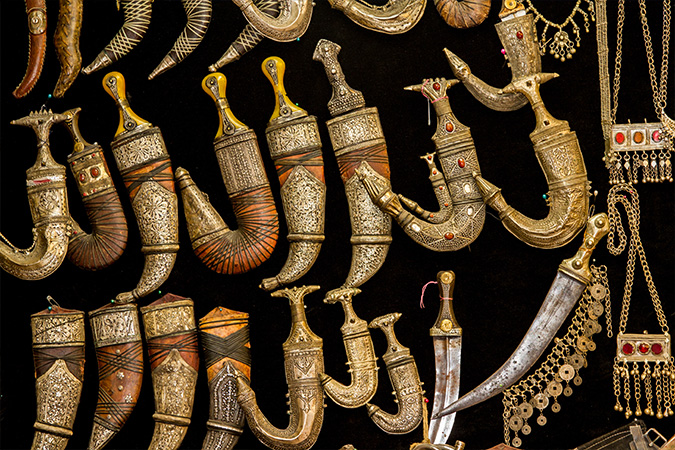
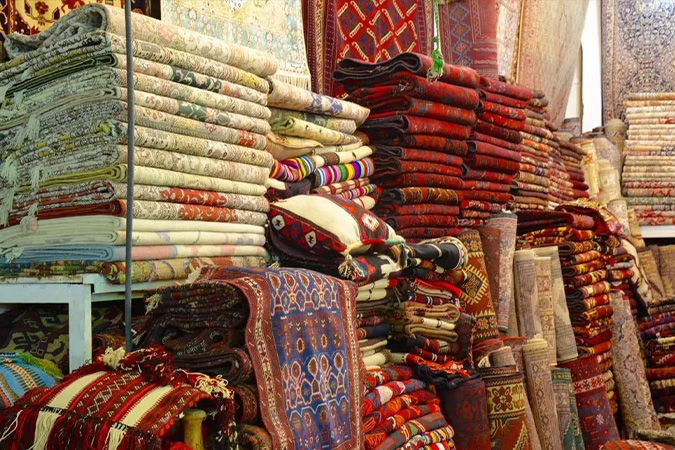
Deerah Souq is famous for its variety of old copper and brass objects including silver daggers, silver Beduins Jewelry and dresses. While entering from main access, one always smells sandal wood fragrance. Deerah Souq is worth buying antique carpets and other useful Saudi heritage antiques.

Thumama Desert

Thumama Desert is approx. 60 Kms from Riyadh city toward King Khaled Airport. This is the nearest desert where enthusiasts enjoy their evenings and specially weekends on sand.

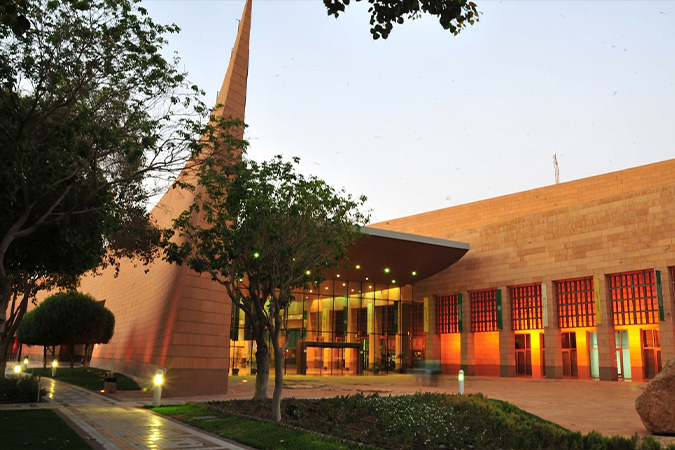
The National Museum

The National Museum, which opened in Riyadh in 1999 to celebrate the centenary of Saudi unification, was the result of an international design competition. The primary custodian of the Saudi national heritage and culture, the Museum is a place of learning and discovery, designed to sing out with quiet excitement and inspiration, to kindle pride in the Arab heritage and reverence for Islam. This national Landmark is composed of eight galleries telling the complete story of Arabian History from the creation of the universe to our modern era.

DAY 03 – RIYADH – ABHA

  • Morning flight to Abha.
  • Arrive at Abha and transfer to the hotel (According to choice & budget, variety of choices available).
  • Afternoon proceed for visit to Baskat Market, Muftaha Village Art Gallery, Shada Palace etc.

Baskat Market

Baskat Market of Abha is famous for these heavy duty colorful baskets which are made from reeds and sometimes vinyl. Most of which are handmade. They can be found at good prices and used for just about anything. It is run by mostly Saudi women.

Muftaha Village

Muftaha Village was founded in 1989 as an attempt to promote the arts in the Kingdom of Saudi Arabia. It has now become a popular attraction and is frequented by tourists and locals alike. This cultural center offers artist’s studio and exhibition space, and therefore the opportunity to present their unique work to the community. This initiative was the first of its kind; with the Saudi Arabian government’s aim being to bring together individuals passionate about photography, traditional crafts, and fine arts and embrace them.

The city of Abha

The city of Abha also includes the famous Shada Palace which dates to the year 1250H (1927 AD), and contains numerous archeological artifacts. It was as an office/residence for King Abdul Aziz's governors. After being restored, it was reopened as a museum in 1987.

DAY 04 – ABHA

  • Today proceed for a full day excursion to Mountain Souda, Al Habala Village, Hamsan Village etc.
  • Overnight at the hotel.

Asir

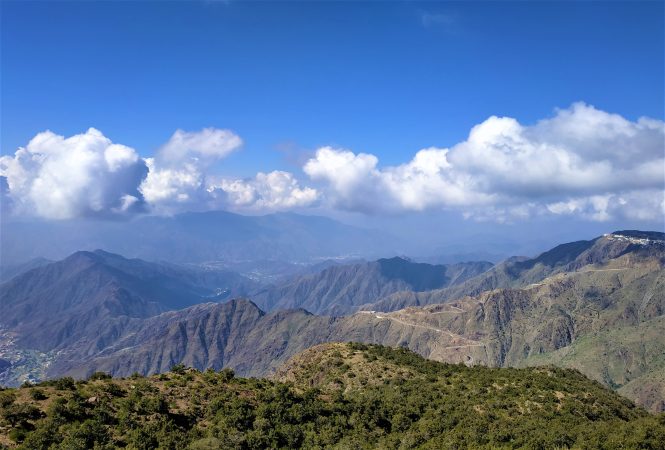
Asir, with its capital at Abha, is mainly a highland province and includes the entire area of southwest Saudi Arabia till the Yemen border. Asir covers the modern administrative provinces of Jizan, Asir, Bahah, and southern Mecca. The region’s topography and vegetation are varied from the juniper forests of the highlands to the “dawm” palm thickets of the coastal plain. Protected Areas and the Asir National Park have been set up near Abha. Unlike the rest of Saudi Arabia, Asir enjoys quite a high rainfall; its highest mountain range runs from Taif south to the Yemen border and catches the highest rainfall

Mount Souda

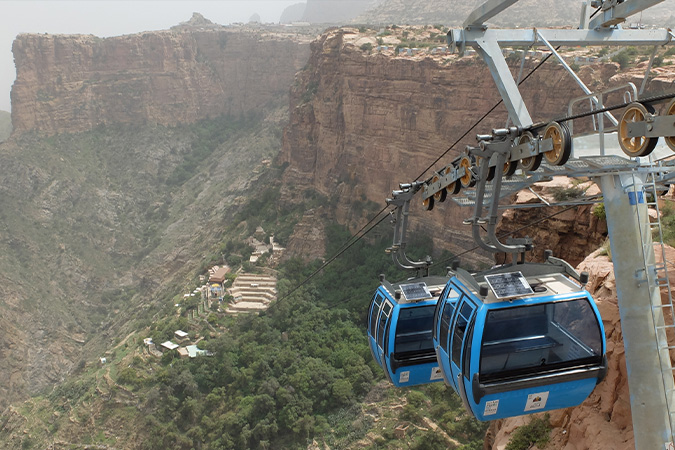
Mount Souda offers magnificent views and an unforgettable experience. Perched at the highest point accessible by road, the cable car takes visitors on its seven kilometer ride at an altitude of 2,500 meters. One of the most interesting aspects of the area is its distinctive local people, the colorful Flower Men descendants of the ancient Tihama and Asir groups.

Al Habala

Al Habala, the location of the first cable car in Asir, is named after an old village located on a steep 400 metre cliff made famous by the people of Al Habala. The inhabitants lived in stone dwelling clinging to the cliff-face for the security and safety found in the rock walls. So sheer was the cliffside that the villagers (men and women) lowered themselves down into ravine on ropes. These rugged and fearless people came to be known as the Rope People of Al Habala.

DAY 05 – ABHA - NAJRAN

  • Drive to Najran, En route visit Khamis Mushayt.
  • Arrive at Najran and proceed for visit to Museum, Al Okhdood, Al Aan Palace, Mud Houses, Dam, Emara Palace and Jambiya(Dagger) Souq.
  • Overnight at the hotel.

Khamis Mushayt

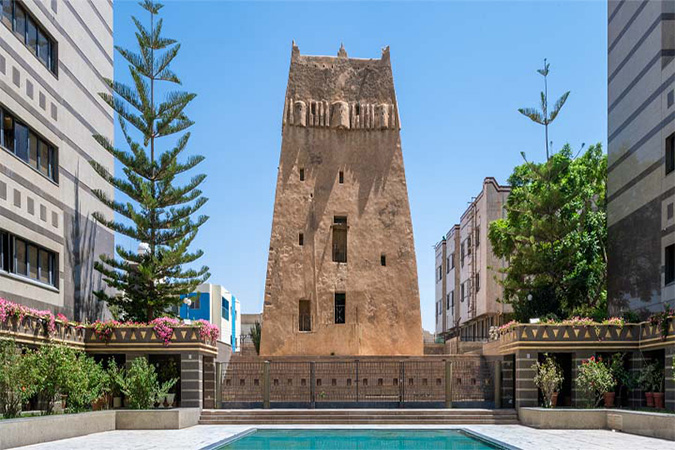
Khamis Mushayt, an industrial city about 25 km east of Abha, is under-going extensive tourism development. The city's antique silver market is its chief tourist draw. An imaginative development, the Bin Hamsan Traditional Village on the outskirts of town consists of a stone tower and buildings, including a museum that is replica of an Asir home two decades ago, an auditorium, a traditional restaurant and a gift shop.

Al-Aan Palace or Saadan Palace

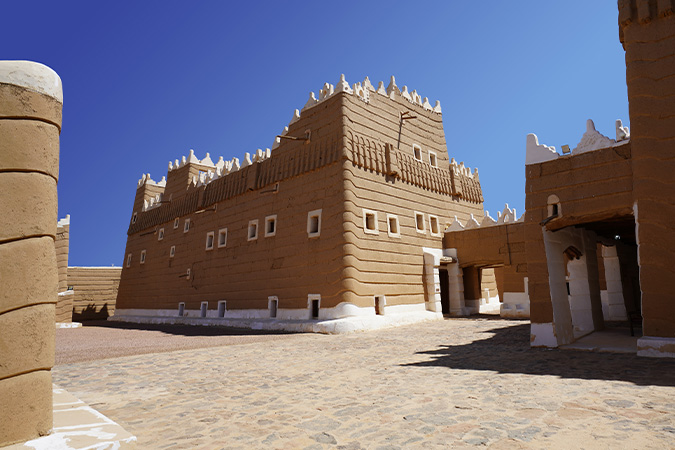
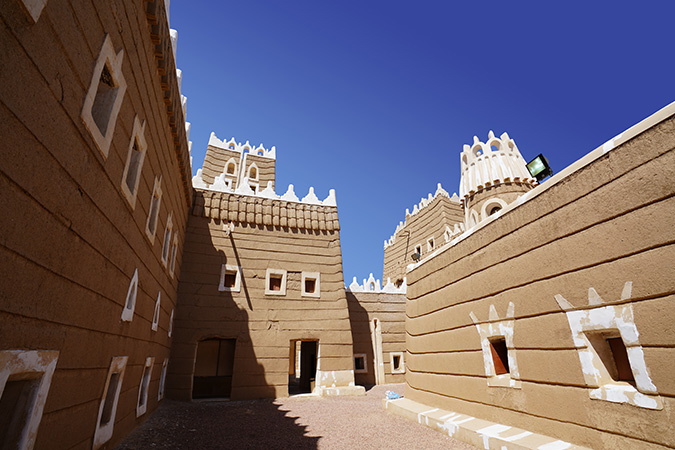
Al-Aan Palace or Saadan Palace in the village of Saadan in Najran city. Located on Al-Aan mountain, the heritage palace was built in 1100 AH by the Sheikhs Muhammad bin Ismail Al Makrami and HibatuAllah bin Ismail Al Makrami. Successive renovation works at the palace continued after the two sheikhs passed away, the last and most extensive of which was in 1440 AH. The palace is built entirely of mud with the building blocks system Najran is famous for, where walls are built in successive stages on a foundation of stone, while the roofs are made of wood, palm trunks and fronds, and Ziziphus trees. Al-Aan Palace is a model of traditional architecture consisting of 4 floors, each occupied by one family, besides being surrounded by a wall with several circular and rectangular towers to protect the palace and its surrounding areas.

Emara Palace

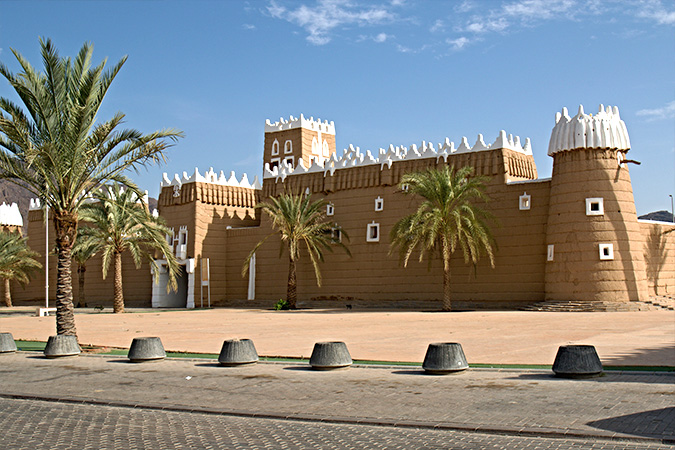
Emara Palace located in the center of the city of Najran, built in 1942 on the orders of the ten Emir of Najran and inspired by the traditional Yemeni mudbrick architecture. It took until 9162 to complete. The place is surrounded by square walls and the towers inside rise 3-4 stories high, painted with white tops and small slit-like windows. Its first purpose was to host the new governor and its companions, but also the telegraph post and the police. It is surely the most sizeable historical building of the Province with its 625 square meters and 65 rooms. It is open to public and comprise as well a museum telling the story of the Palace.

The archaeological gem of Al-Okhdood

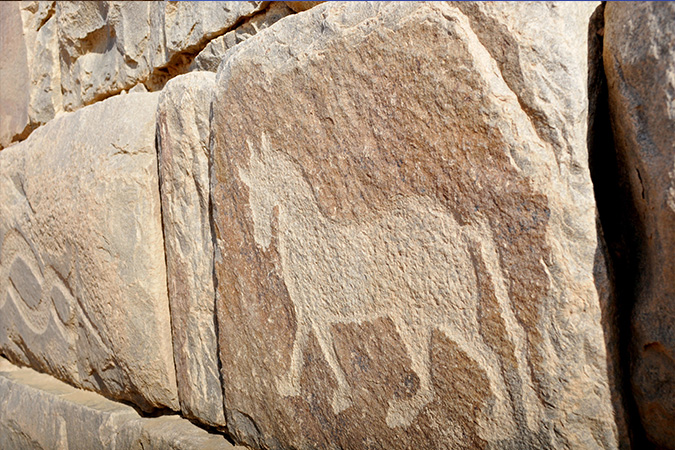
The archaeological gem of Al-Okhdood in southwestern Saudi Arabia dates back more than 2,000 years. The historic site in Najran is rich with artifacts and remnants of ancient drawings and engravings on stones, which include depictions of a human hand, a horse, a camel, snakes and symbols.

DAY 06 – NAJRAN

  • Today proceed for excursion to Bi’r Hima and Al Faw archaeological sites.
  • Overnight at the hotel.

Bi’r Hima

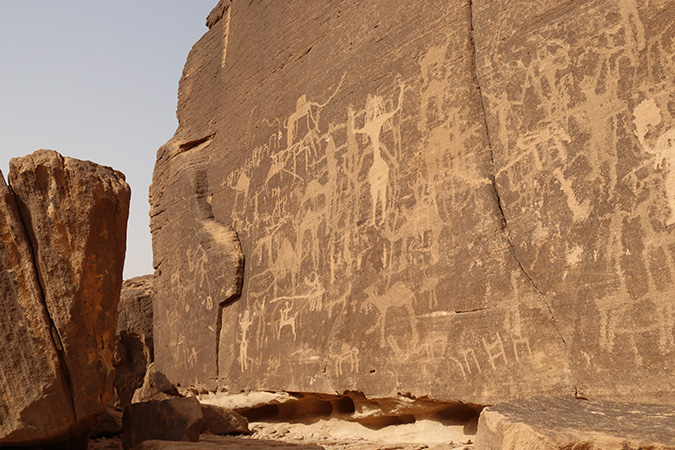
Bi’r Hima is located approx. 30 Kms northeast of Najran and is better known for its famous wells. The valleys and mountains are the homes of hundreds of petro glyphs, battle scenes with cavalrymen and infantrymen wielding various kinds of weapons.

Qaryat Al Faw

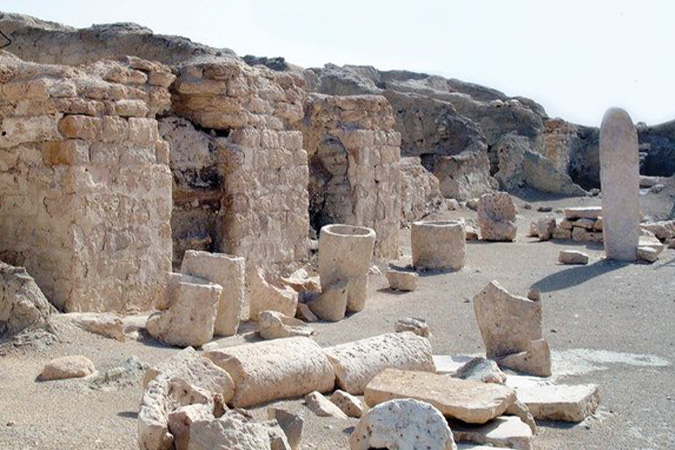
Qaryat Al Faw is located approx. 120 Kms South-east of Wadi Al dawasir. In Qaryat Al-Fau there are lot of houses, palaces, and shops and related assets in which four sites in Qaryat Al-Fau complex are located, three related monuments, and one cultural landscape are included as component parts of the property. The entire archaeological site of Qaryat Al-Fau suffered considerable damage due to its fragile nature and archaeological excavations taken place on many of the component parts.

DAY 07 – NAJRAN – JAZAN – FARASAN ISLAND

  • Drive from Najran to Jazan.
  • Take boat from Jazan to Farasan Island.
  • Arrive at Farasan Island and transfer to your hotel.
  • Rest of the day at leisure.
  • Overnight at the hotel.

DAY 08 – FARASAN ISLAND

  • Morning sea cruise
  • Overnight at the hotel

Morning sea cruise

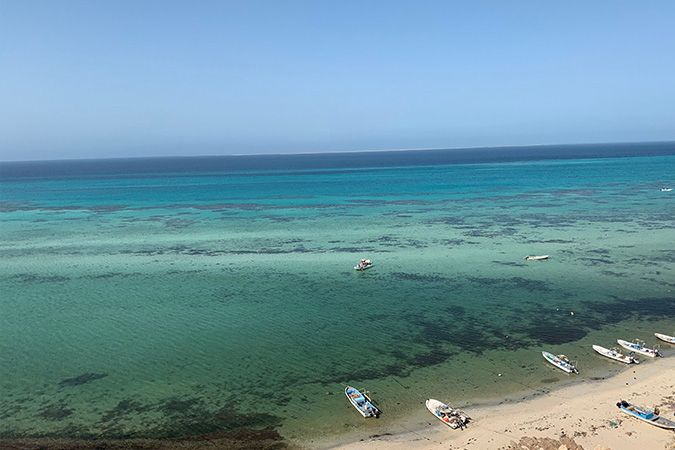
Morning sea cruise for 4 hours (Including snorkeling, fishing and the visit of the [Garmel House] on Qummah island, which was built by the Germans to supply the ships with coal during World War 1319 and some other tours to Damsk & Zafaf Islands.

Al Hsas tourist beach

Afternoon visit Al Hsas tourist beach & the location of the Annual Fish Festival, Major knights and some antiquity monuments (Qurayat area) and Visiting AL Zilay museum for marine snails and minarets.

DAY 09 – FARASAN ISLAND – JAZAN – ABHA - TABUK

  • Morning check out from the hotel and take boat to Jazan.
  • Arrive at Jazan and drive to Abha.
  • Arrive at Abha and fly to Tabuk.
  • Arrive at Tabuk and transfer to the hotel.

DAY 10 – TABUK – HISMA VALLEY – TABUK

  • Excursion to Hisma Valley using 4x4.
  • Overnight at the hotel.

Hisma Valley

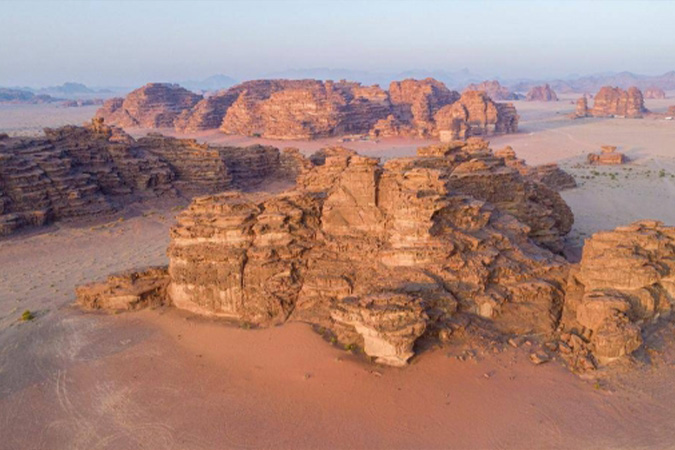
Hisma Valley is home hundreds of unique rock formation and ancient rock art and hundreds of Arabic inscriptions dating back to the first decades of Islam.

Tabuk

Overnight at hotel in Tabuk.

DAY 11 – TABUK – AL JOUF

  • Full day drive to Al Jouf, Enroute visit Dumat al Jandal, Omar Mosque etc.
  • Arrive at Al jouf and transfer to hotel

Dumat al-Jundal

Dumat al-Jundal is an ancient city of ruins located North Western Saudi Arabia in the Al Jouf Province. It is located 40 km before Sakaka. The name Dumat al-Jandal means literally "Dumah of the Stone", since this was the territory of Dumah, one of the twelve sons of Ishmael.

The Omar Mosque

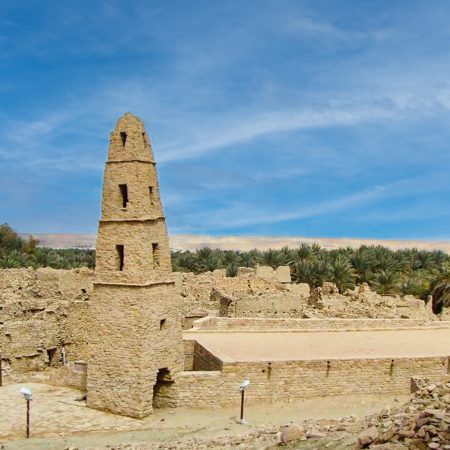
The Omar Mosque is situated in the town of Dumat al-Jandal, a major intersection of ancient trade routes linking Mesopotamia, Syria and the Arabian Peninsula. The mosque itself was built in 634-644.

DAY 12 – AL JOUF – HAIL - JEDDAH

  • Drive to Hail, En route visit Jubbah rock carvings, Zaa’bal Fortress, Al Rajajil stones
  • Arrive at Hail, Late afternoon proceed for visit to A’arif Fortress and Qishla Palace.
  • Evening flight to Jeddah
  • Arrival at Jeddah, transfer to Hotel and overnight

Zaa'bal Fortress

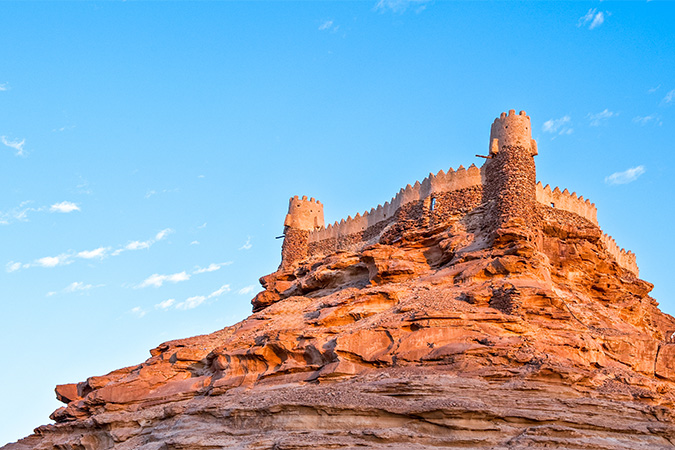
Zaa'bal Fortress situated on high ground overlooking Sakaka from the northwest, it is the centre of many legends, but it's widely believed that this fortress was built in the seventh century B.C. Mud construction were added to it in the third century. The fortress could only be reached from one side directly.

Al-Rajajil

The Rajajil Columns is an archaeological site of pillars carved from sandstone thought to be 6,000 years old dating back to the Chalcolithic period.

Jubbah

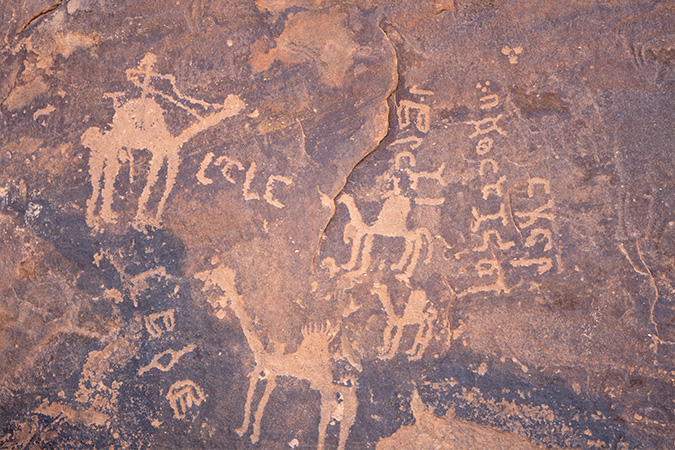
Jubbah is one of the most interesting places of Saudi Arabia. It is believed that camel figures carved at Jubbah are the oldest in the Arabian Peninsula. These rock carvings date back to approx. 4000 years.

Hail is located in the Shammar Mountain region which is in west of the Al Odairie Valley. Hail is an urban centre where people resettle due to its development. The population of this city is over 100,000.

A'arif Fort

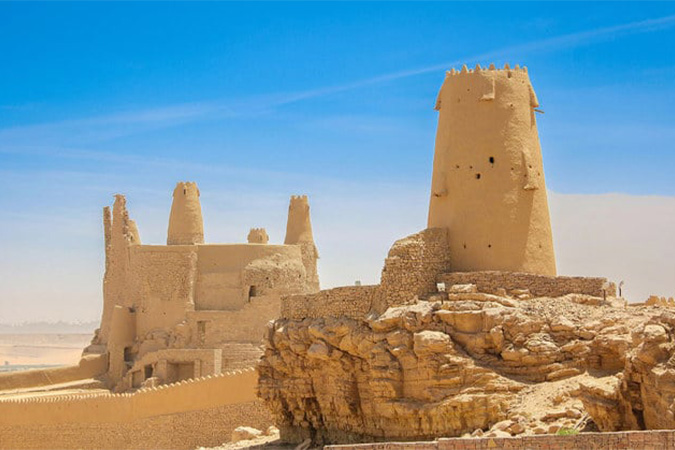
A'arif Fort is located in the city of Hail on the highest peak of a mountain overlooking the city. It was built in 1260 AH on an area of 440 sqm. A'arif Fort with its rectangular shape and medium size, is surrounded by a solid wall with openings to drain rainwater. Its walls were built of mud bricks and mud, on stone foundations, and equipped with everything the anchors and city defenders need, such as towers, observation slots, sleeping areas and others for storage, a mosque, toilets, and 30 watchtowers to defend the area. The fort is distinguished by its large doors built of wood and carved by hand, besides the height of its conical tower. For a period of time, the castle was used to observe moon phases during Ramadan and holidays, and today it has become one of the most important archaeological and cultural monuments in the Kingdom.

Qishla Palace

Qishla Palace was constructed during 1940s when Prince Abdul-Aziz bin Musa'ad Al Saudi had office in Hail Province. This is a double story mud Palace. This has two main gates with 8 watch towers.

DAY 13 – JEDDAH

  • Morning visit old houses, Nasif House, Fish Market etc.
  • Afternoon visit Abdul Rauf Khalil Art Museum, Corniche area etc.
  • Transfer to the airport for your departure flight.

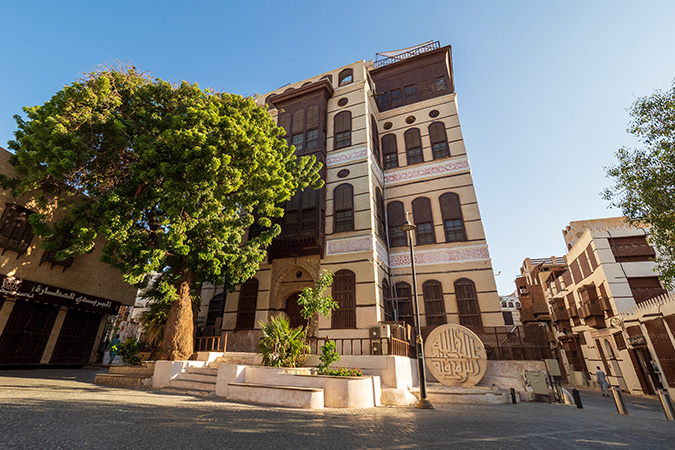
Houses were constructed from coral and reinforced with wood so that beams crisscross the interior walls. Wooden balconies and casement windows are a special feature of Jeddah's style, with elaborate casements decorating the facades of the old houses, normally there is a small balcony fronting every window. Doors and windows shutters are intricately carved. Some are painted and some remain simply wood with varnish.

The Nasif House

The Nasif House was built during the 1850s by the well-known Nasif Family, one of the most influential trading families in the long history of Jeddah. In the 19th and early 20th centuries the house was one of the most important building in Jeddah. It was here that King Abdul Aziz spent his first night in Jeddah, as the guest of Mohammed Nasif, after he lead his victorious army into the capital of the Western Province. The Municipality of Jeddah recognized the architectural and historic value of the house and in 1964 it was converted into a museum and put under Government care.

Abdul Rauf Khalil Art Museum

Abdul Rauf Khalil Art Museum is one of the most unusual museums. Its four buildings comprise an electric hodge-podge of more than 10,000 weird and wonderful artefacts. One of its main buildings burnt out during 2002, located in the Al Tayebat International City, which is a Museum complex highlighting the city's heritage, with a mosque, relics & traditional architecture.

The Corniche

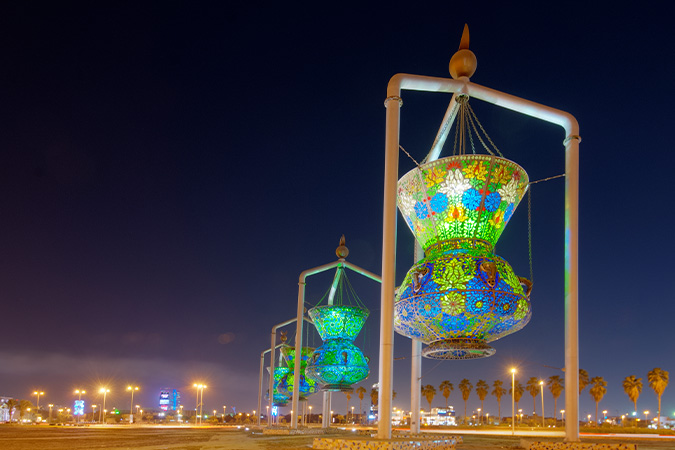
The Corniche of Jeddah is one of the most important achievements of the city and is a major attraction for visitors to Jeddah. As Jeddah's Red Sea coast extends for more than 80 km, the Municipality has made use of this long expanse of waterfront and turned it into place of fresh air for the city.

Login

If you need any help, please contact us or send us an email, We are sure that you can receive our reply as soon as possible.

Address

The Exchange Tower 1704,
Happiness Street, Business Bay,
Dubai UAE

Phone

(+971) 4453 3029

Email