News

11 Days Discover Saudi Arabia

11 Days Discover Saudi Arabia

Saudi Arabia, KSA

From

Riyadh

Start Time

Duration

11 Days

Overview

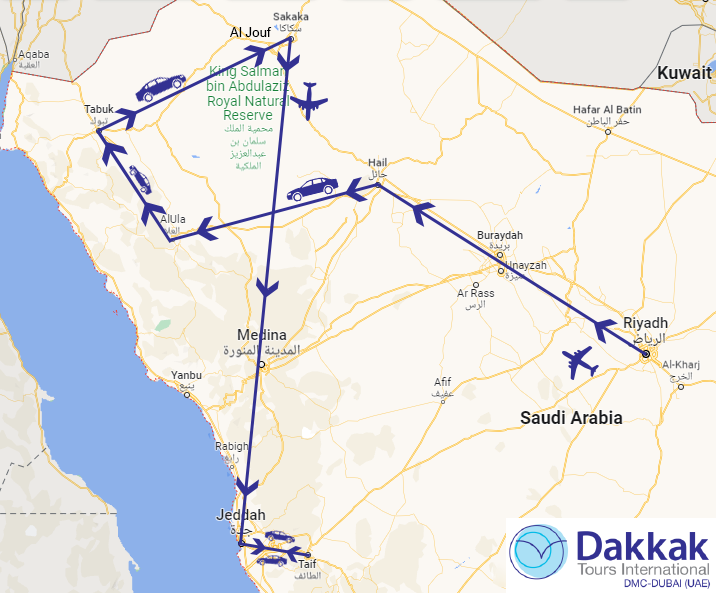
ITINERARY SUMMARY

  • Day 01: Riyadh Arrival and Hotel transfer, dinner at Hotel and overnight.
  • Day 02: Visit to Diriyah, Masmak Fort, Deerah Souq, National Museum, Kingdom Tower Bridge.
  • Day 03: Flight from Riyadh to Hail, check-in to Hotel, visit to Jubbah rock carvings, Qishla Palace and A’arif Fortress, dinner at the hotel.
  • Day 04: Drive from Hail to Al Ula, transfer to camp, visit to Old City and Harrat Viewpoint, dinner and overnight at camp.
  • Day 05: Breakfast at camp, full day excursion to Nabatean sites of Madain saleh which includes Qasr Bint, Diwan, Qasr Farid, Underground City and more. Dinner and overnight at camp.
  • Day 06: Breakfast at camp, drive to Tabuk, check-in to Hotel, sightseeing tour of Tawba Mosque, Hijaz Railways and Tabuk Fort from outside, dinner and overnight at the hotel.
  • Day 07: Excursion to Hisma Valley using 4x4, overnight in Tabuk.
  • Day 08: Drive from Tabuk to Al Jouf, En route visit Dumat al Jandal, Omar Mosque. Arrive to Al Jouf, check-in to hotel and overnight.
  • Day 09: Breakfast at the hotel, sightseeing tour of Al Jouf, Za’abal Fortress, Al-Rajajil Standing Stones, afternoon flight to Jeddah, arrival at Jeddah and check-in to Hotel, dinner and overnight at the hotel.
  • Day 10: Breakfast at the hotel, drive to Taif, full day excursion visiting Abbas Mosque, Sharif Museum, Shobra Palace, Rose Factory and more, drive back to Jeddah, overnight at the hotel.
  • Day 11: Breakfast at the hotel, visit old houses, Nasif House, Fish Market, Abdul Rauf Khalil Art Museum, Corniche area, Al Rahma Mosque and more, transfer to airport for departure flight.

ITINERARY MAP

ITINERARY MAP

Highlights

Tour Plan

DAY 01 – RIYADH

  • Arrive Riyadh and transfer to your hotel (According to choice & budget, variety of hotels available).
  • Dinner at the hotel.

DAY 02 – RIYADH

  • Morning visit historical city of Diriyah, Masmak Fort and Deerah Souq.
  • Afternoon visit National Museum followed by visit to Kingdom Tower Bridge for a panoramic view of Riyadh.
  • Dinner and Overnight at the hotel.

Diriyah

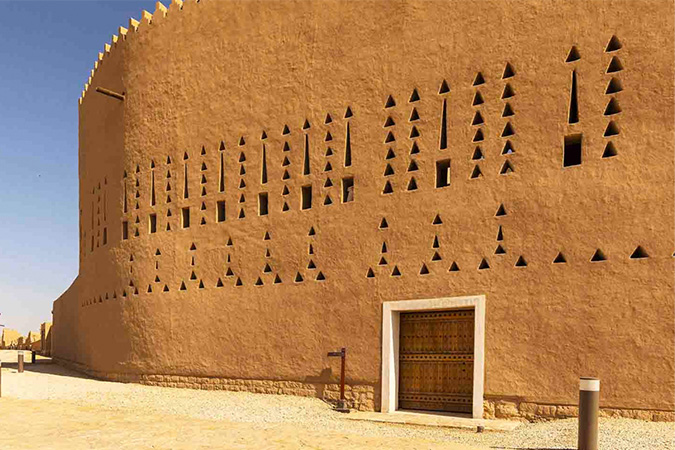
The old city of Diriyah is located about 20km from the main city center of Riyadh. It is one of the most important archaeological sites from where the history of Saudi Dynasty begins. It is situated in the eastern part of the so-called Najd area in the valley known as Wadi Hanifa. The meaning of Najid is the high plateau, which forms the central part of Saudi Arabia. It is recorded by the chronicles that one of the person known as Ibn Dir, who was also the chief of al-Dir clan of Duru, which was belonging to Bani Hanifa tribe, was ruling this area. He had a vast fertile land in the valley, which he was not able to utilize completely due to lack of thin population of his clan. Therefore, he invited another clan of the same Banu Hanifa tribe to settle down on the fertile area of the Hanifa valley. Therefore, the clan named Murdah comes under the leadership of Mani al-Muraydi in 1446 A.D in Wadi Hanifa. Ibn Dir gave land for the cultivation to the clan in the Wadi Hanifa and the clan settled down. They were the ancestors of the Al-Saud family who established their first rule at Diriyah.

Masmak Fort

The Masmak Fort is one of the most important monuments in Saudi Arabia from where the modern Saudi History begins. It is an important historic landmark in the city of Riyadh. This palace was built during the reign of Abdullah bin Rashid in the year 1895 A.D. The reason for building this historic palace was to serve as military garrison for the Abdullah bin Rashid army who was operating under a Governor in Riyadh from the Hail. His Majesty King Abdulaziz captured the fort on 15th January 1902.

Deerah Souq

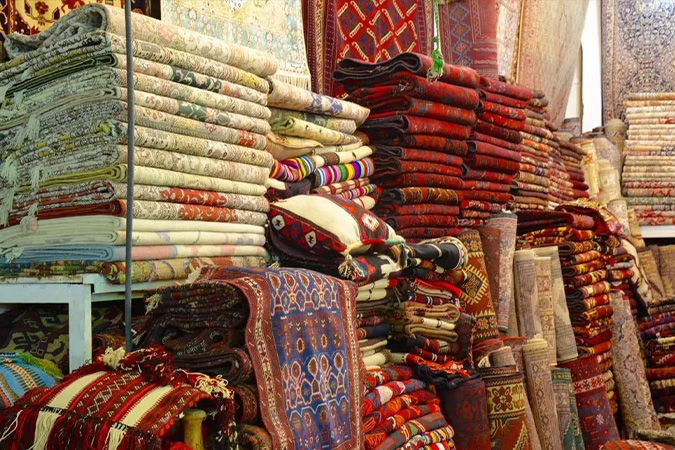
Deerah Souq is famous for its variety of old copper and brass objects including silver daggers, silver Bedouins Jewelry and dresses. While entering from main access, one always smells sandal wood fragrance. Deerah Souq is worth buying antique carpets and other useful Saudi heritage antiques.

National Museum

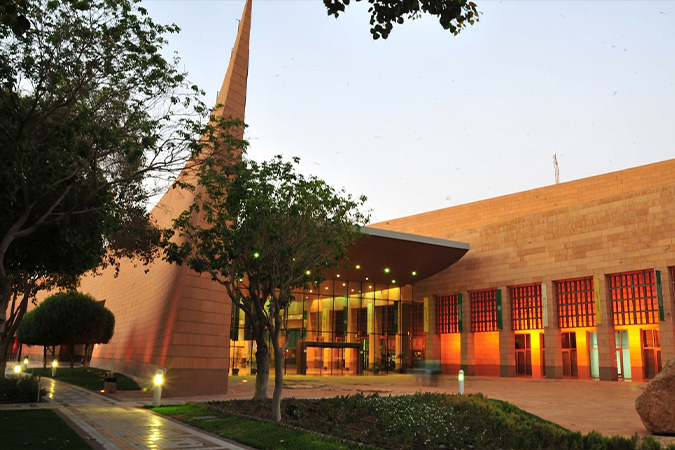
The National Museum, which opened in Riyadh in 1999 to celebrate the centenary of Saudi unification, was the result of an international design competition. The primary custodian of the Saudi national heritage and culture, the Museum is a place of learning and discovery, designed to sing out with quiet excitement and inspiration, to kindle pride in the Arab heritage and reverence for Islam. This national Landmark is composed of eight galleries telling the complete story of Arabian History from the creation of the universe to our modern era.

DAY 03 – RIYADH – HAIL - JUBBAH

  • Breakfast at the hotel.
  • Transfer to the airport for your flight.
  • Arrive Hail and transfer to hotel (According to choice & budget, variety of choices available).
  • Afternoon proceed for visit to Jubbah rock carvings following by visit to Qishla Palace and A'arif Fort.
  • Dinner and overnight at the hotel.

Jubbah

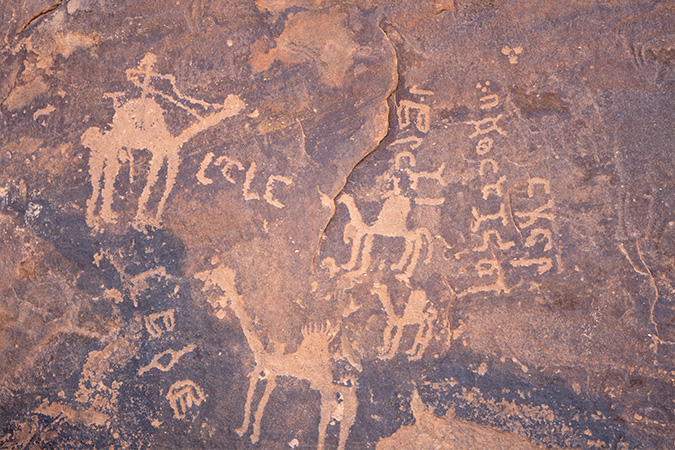
Jubbah is one of the most interesting places of Saudi Arabia. It is believed that camel figures carved at Jubbah are the oldest in the Arabian Peninsula. These rock carvings date back to approx. 4000 years.

Hail

Hail is located in the Shammar Mountain region which is in west of the Al Odairie Valley. Hail is an urban centre where people resettle due to its development. The population of this city is over 100,000.

Qishla

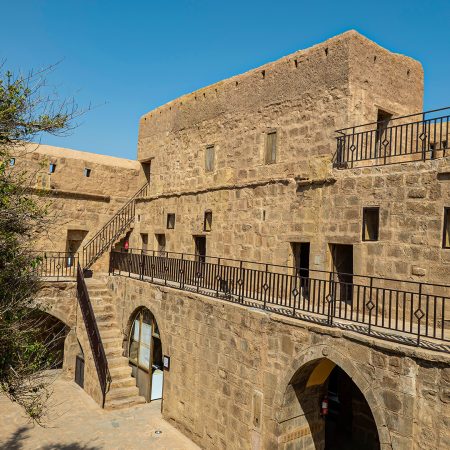
Qishla Palace was constructed during 1940s when Prince Abdul-Aziz bin Musa'ad Al Saudi had office in Hail Province. This is a double story mud Palace. This has two main gates with 8 watch towers.

A'arif Fort

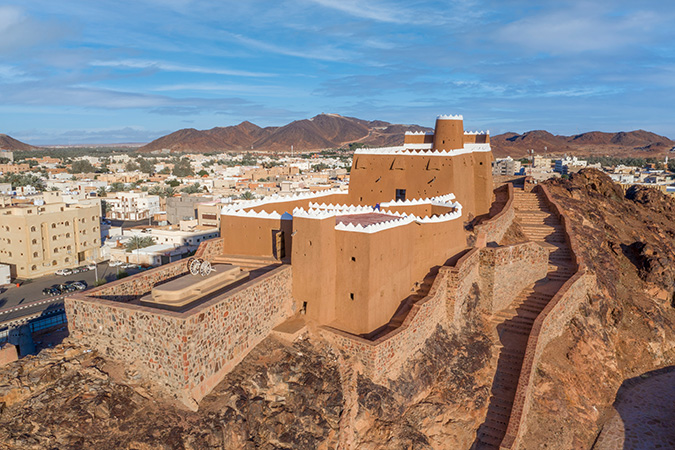
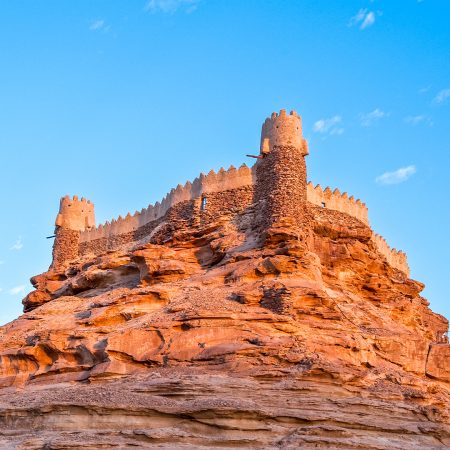
A'arif Fort is located in the city of Hail on the highest peak of a mountain overlooking the city. It was built in 1260 AH on an area of 440 sqm. A'arif Fort with its rectangular shape and medium size, is surrounded by a solid wall with openings to drain rainwater. Its walls were built of mud bricks and mud, on stone foundations, and equipped with everything the anchors and city defenders need, such as towers, observation slots, sleeping areas and others for storage, a mosque, toilets, and 30 watchtowers to defend the area. The fort is distinguished by its large doors built of wood and carved by hand, besides the height of its conical tower. For a period of time, the castle was used to observe moon phases during Ramadan and holidays, and today it has become one of the most important archaeological and cultural monuments in the Kingdom.

DAY 04 – HAIL – AL ULA

  • Breakfast at the hotel.
  • Drive to Al Ula.
  • Arrive Al Ula and transfer to camp (According to choice & budget, variety of choices available).
  • Afternoon enjoy visit to old city and highest point (Harrat Viewpoint).
  • Dinner and overnight at camp.

Wadi Al Ula, gateway to Madain Saleh

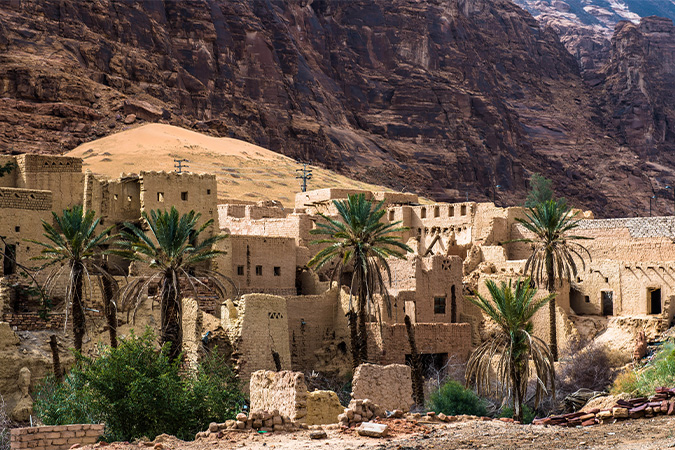
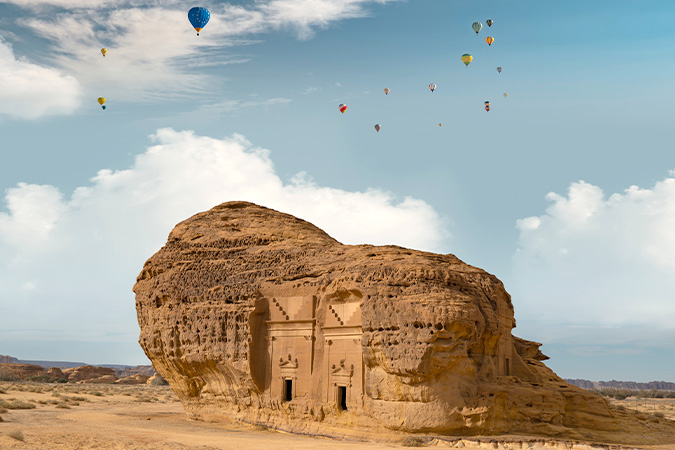
Wadi Al Ula, gateway to Madain Saleh, which is known for its Lion of the Lihyanites-predecessors of the Nabateans (100 to 500 BC). Madain Saleh is the prime tourist attraction of the Kingdom. It was known as “Al Hijr” in the ancient times and served as a stopover on a very prosperous trade route. The cities lie on 9 square Km in an area of isolation about 845 Km from Jeddah in the northwestern part of Saudi Arabia between Tabuk and Madinah.

DAY 05 – AL ULA / MADAIN SALEH

  • Breakfast at camp.
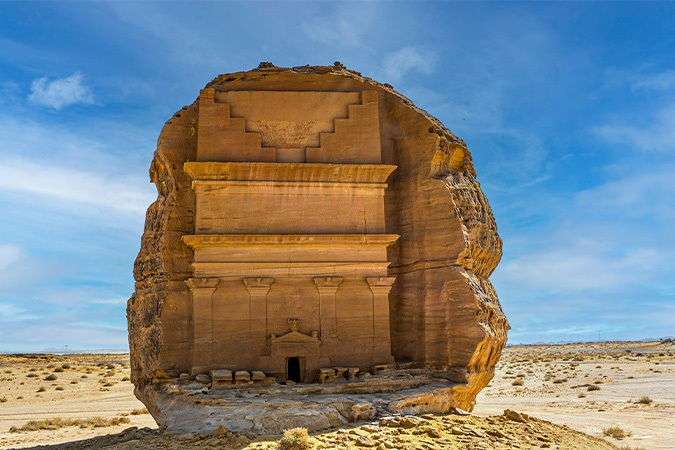
  • Full day excursion to magnificent Nabatean sites of Madain Saleh which includes Qasr Bint, Diwan, Qasr Farid as well as underground city, Lihyan, and more.
  • Dinner and overnight camp.

Al-Ula and Madain Saleh

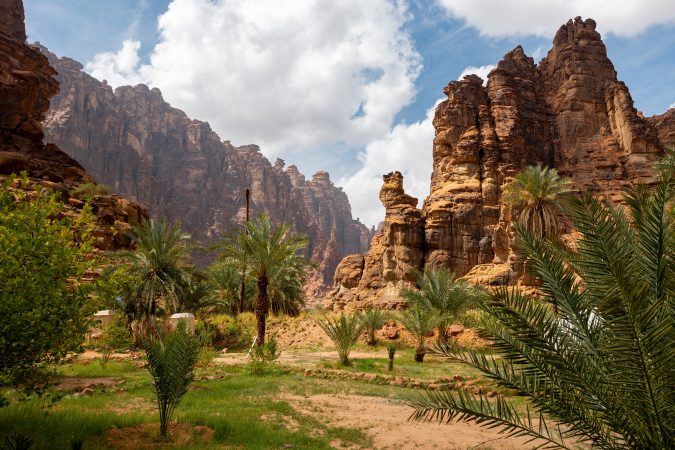
Al-Ula and Madain Saleh are two of Saudi Arabia's most prominent historical and archaeological sites. Al-Ula, located in the northwestern region of the country, has been inhabited for thousands of years and is home to several significant cultural and historical landmarks. The site is known for its ancient architecture, rock formations, and well-preserved archaeological sites.

Madain Saleh

Madain Saleh, located just north of Al-Ula, is a UNESCO World Heritage Site and one of the most important archaeological sites in the Middle East. It was the second lar

DAY 06 – AL ULA – TABUK

  • Breakfast at camp.
  • Drive to Tabuk.
  • Arrive at Tabuk and transfer to the Swiss International Hotel (4*) or similar.
  • Afternoon sightseeing tour of Tabuk visting Tawba Mosque, Hijaz Railways and Tabuk Fort from outside.
  • Dinner and overnight at the hotel.

DAY 07 – TABUK – HISMA VALLEY – TABUK

  • Excursion to Hisma Valley using 4x4.
  • Overnight at the hotel in Tabuk.

Tabuk

Tabuk is a city located in northwestern Saudi Arabia, about 200 kilometers from the Red Sea. It is an important stop for travelers on their way to the ancient city of Madain Saleh, a UNESCO World Heritage Site that features well-preserved tombs and structures from the Nabatean civilization.

HISMA VALLEY (Jibal Hisma)

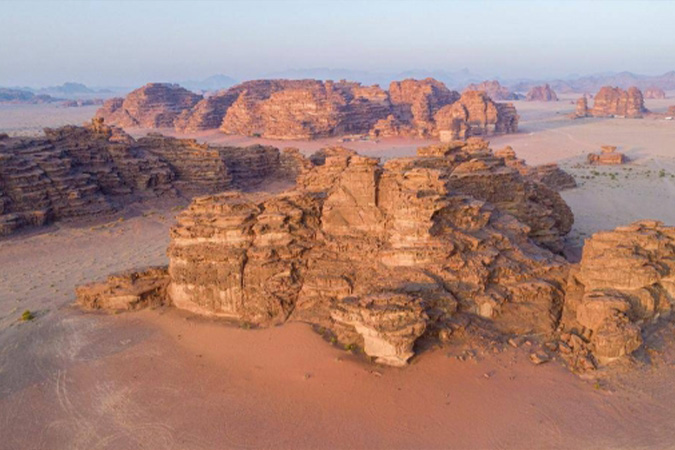
HISMA VALLEY (Jibal Hisma) in Tabuk is home to hundreds of unique and beautiful rock formations as well as ancient rock art and hundreds of Arabic inscriptions dating back to the first decades of Islam.

DAY 08 – TABUK – AL JOUF

  • Drive from Tabuk to Al Jouf.
  • En route visit Dumat al Jandal, Omar Mosque and more.
  • Arrive Al Jouf and transfer to hotel
  • Overnight at the hotel.

Dumat al-Jundal

Dumat al-Jundal is an ancient city of ruins located North Western Saudi Arabia in the Al Jauf Province. It is located 40 km before Sakaka. The name Dumat al-Jandal means literally "Dumah of the Stone", since this was the territory of Dumah, one of the twelve sons of Ishmael.

The Omar Mosque

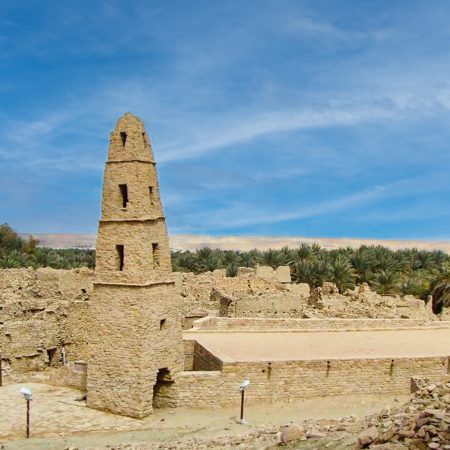
The Omar Mosque is situated in the town of Dumat al-Jandal, a major intersection of ancient trade routes linking Mesopotamia, Syria and the Arabian Peninsula. The mosque itself was built in 634-644.

DAY 09– AL JOUF – JEDDAH

  • Breakfast at the hotel.
  • Proceed for sightseeing tour of Al Jouf visiting Za’abal Fortress, Ar Rajajil Standing Stones etc.
  • Afternoon transfer to the airport for your flight to Jeddah.
  • Arrive Jeddah and transfer to Hotel (According to choice & budget, variety of choices available).
  • Dinner and overnight at the hotel.

Zaa'bal Fortress

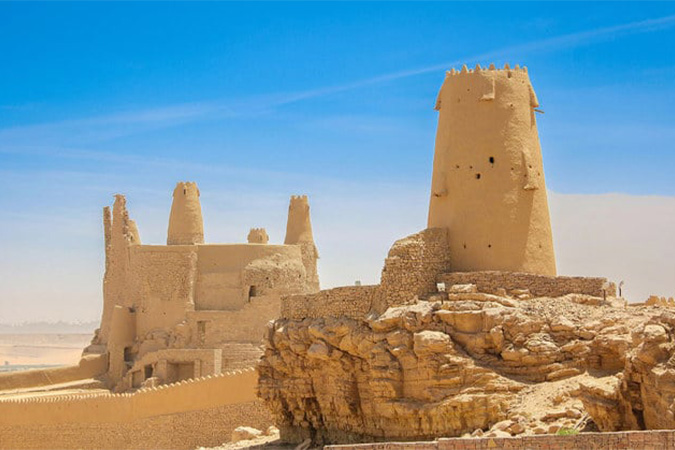
Zaa'bal Fortress situated on high ground overlooking Sakaka from the northwest, it is the centre of many legends, but it's widely believed that this fortress was built in the seventh century B.C. Mud construction were added to it in the third century. The fortress could only be reached from one side directly.

Al-Rajajil

The Rajajil Columns is an archaeological site of pillars carved from sandstone thought to be 6,000 years old dating back to the Chalcolithic period.

DAY 10 – JEDDAH – TAIF - JEDDAH

  • Breakfast at the hotel.
  • Drive to Taif (approx. 2 hours)
  • Full day excursion to Taif visiting Abbas Mosque, Sharif Museum, Shobra Palace etc, Rose Factory etc.
  • Late afternoon drive back to Jeddah.

Al Abbas Mosque

Al Abbas Mosque is close to the grave of Abdullah bin Abbas. He was the paternal cousin of our Holy Prophet (Peace be upon Him).

Sharif Museum Taif

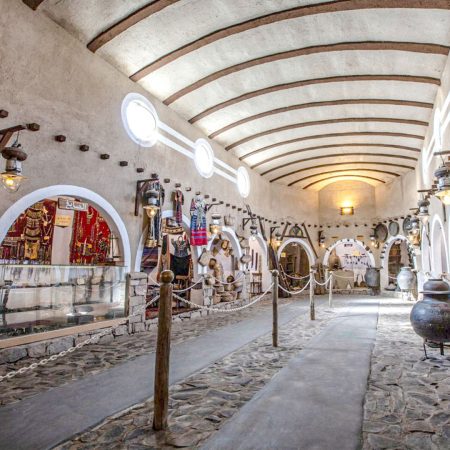
Sharif Museum Taif was found on the back of Meles Al Sharif and is a national museum inside a large building of 5000 Sq. Meters. It displays a huge collection of heritage pieces of all kinds, functions and materials.

Shobra Palace

Shobra Palace is a beautiful old building which is located alongside the Shobra Street. It was used by several generations of Royal families.

Rose Factory

The largest Rose Factory in Taif is almost 120-year-old, Al Gadhi Rose Factory is worth visiting particularly during harvest season (May to July). During this period, it will remain open for 24 hours and visitors will reveal as to how the flower petals transform into rose water, scent and other domestic products.

DAY 11 – JEDDAH

  • Breakfast at the hotel.
  • Morning visit old houses, Nasif House, Fish Market etc.
  • Afternoon visit Abdul Rauf Khalil Art Museum, Cornische area, Al Rahma Mosque etc.
  • Transfer to the airport for your departure flight.

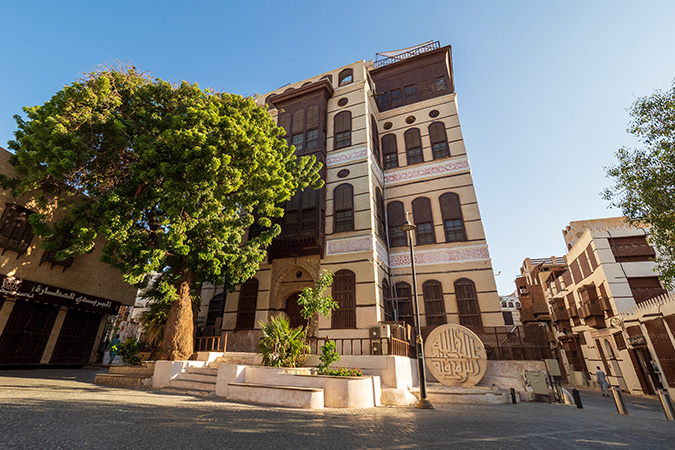
Houses were constructed from coral and reinforced with wood so that beams crisscross the interior walls. Wooden balconies and casement windows are a special feature of Jeddah's style, with elaborate casements decorating the facades of the old houses, normally there is a small balcony fronting every window. Doors and windows shutters are intricately carved. Some are painted and some remain simply wood with varnish.

The Nasif House

The Nasif House was built during the 1850s by the well-known Nasif Family, one of the most influential trading families in the long history of Jeddah. In the 19th and early 20th centuries the house was one of the most important building in Jeddah. It was here that King Abdul Aziz spent his first night in Jeddah, as the guest of Mohammed Nasif, after he lead his victorious army into the capital of the Western Province. The Municipality of Jeddah recognized the architectural and historic value of the house and in 1964 it was converted into a museum and put under Government care.

Abdul Rauf Khalil Art Museum

Abdul Rauf Khalil Art Museum is one of the most unusual museums. Its four buildings comprise an electric hodge-podge of more than 10,000 weird and wonderful artefacts. One of its main buildings burnt out during 2002, located in the Al Tayebat International City, which is a Museum complex highlighting the city's heritage, with a mosque, relics & traditional architecture.

The Corniche

The Corniche of Jeddah is one of the most important achievements of the city and is a major attraction for visitors to Jeddah. As Jeddah's Red Sea coast extends for more than 80 km, the Municipality has made use of this long expanse of waterfront and turned it into place of fresh air for the city.

Login

If you need any help, please contact us or send us an email, We are sure that you can receive our reply as soon as possible.

Address

The Exchange Tower 1704,
Happiness Street, Business Bay,
Dubai UAE

Phone

(+971) 4453 3029

Email